Skip to content

One page · No second page

The whole company,
on one page.

The one-liner

We fit and maintain heat pumps in rented houses built before 1940. Forty done, six staff, a third of revenue on contract.

Say what the company does, who it is for, and how it makes money. You get one page a reader finishes in three minutes — and a list of everything that did not fit, with the reason it went.

50 credits to begin · No card required · Priced in USD

You write it. We lay it out.

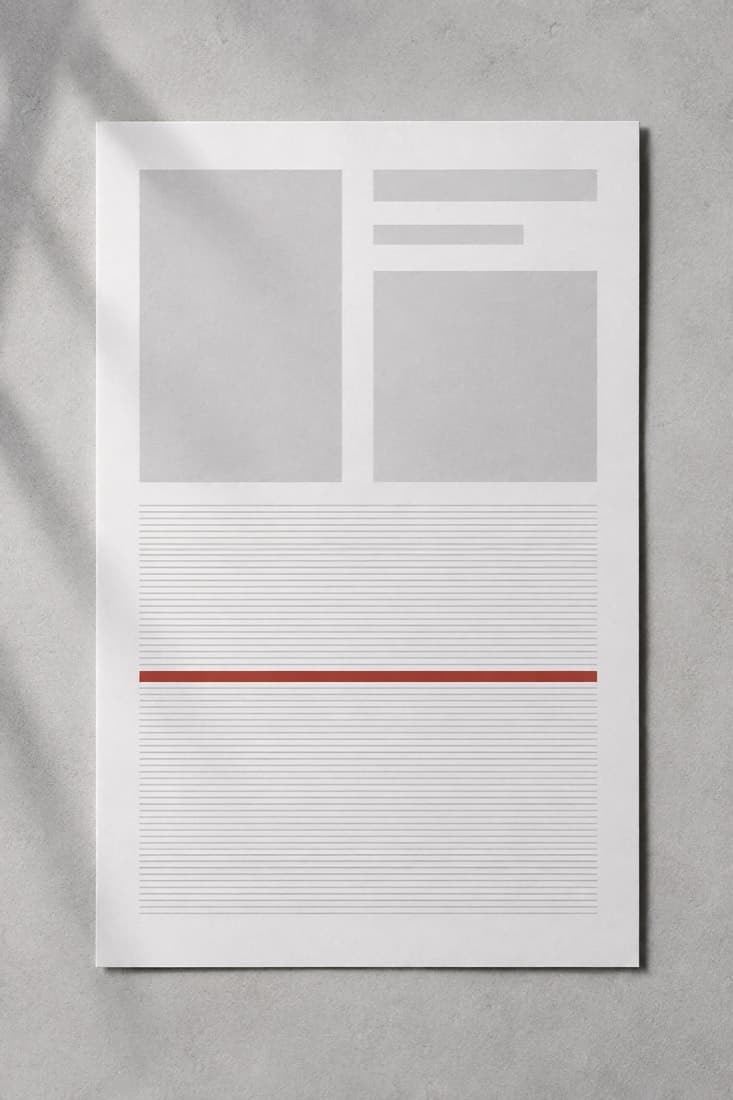
Prose down the left, the figures held to the right where they can be scanned.

Marden Retrofit

Heat pumps in older rented housing

As at 30 June

What we do
We survey, fit and maintain air-source heat pumps in rented houses built before 1940 — the stock most installers will not quote for, because the fabric has to be dealt with before the plant goes in. We do the fabric first: loft, floor void, and the two or three cold bridges that make an older house behave badly. Then we size and fit the unit, and we stay on the property afterwards.
Who it is for
Landlords holding between ten and two hundred older properties, and the letting agents who manage that stock for them. They are working to a deadline set by a rating on a certificate, not by a preference, and they need one contractor who will take the whole house.
How we make money
A fixed price per property for survey and installation, quoted after the survey and held for sixty days. Then an annual maintenance contract, billed per unit, which is where the relationship actually sits. Roughly a third of revenue is under contract before the year starts, and that share has risen in each of the last four quarters.
What we need
Working capital to hold plant stock through the winter, when lead times run long and the work is at its heaviest, and an introduction to two managing agents with older portfolios in the same region.
40
properties completed
6
people on the books
31%
revenue under contract
11 days
median survey to handover
Properties completed · per quarter
4Q17Q212Q317Q4
Revenue by type
Installation62%
Maintenance contracts31%
Survey only7%

Prepared by the company it describes. Not an offer, not investment advice, and not verified by us.

Page 1 of 1

Page fill · fits

Example page. Invented company, invented figures — no real trading information appears on this site. Every word and every number on a page like this is typed by the person whose company it is.

Left off the page

  • The founder’s previous companyDifferent trade. Nobody asked.
  • Full list of forty addressesA count says it. A list does not fit.
  • Three-year revenue projectionA forecast is not a fact about today.
  • The awards pageNot what this reader is deciding on.
  • Detail of the survey methodBelongs in the follow-up, not the page.

One page.
Not one page
and a bit.

No second page
Content that passes the bottom edge blocks the export. You are told which block did it.
No shrinking the type
Body type has a floor of 8.5 pt. Once it is reached the page is refused, not squeezed.
No figures from us
No valuation, no forecast, no market size. Every number is one you typed.
§01

Three moves, and the middle one is the hard one

Most people are not short of things to say about their company. They are short of a way to choose.

  1. A blank sheet and a small recorder on a grey desk

    §01

    Say it out loud

    Type or paste whatever you would say if somebody asked what the company does. Rough is fine. Add the figures you would quote from memory: how many, how many people, how much of it is recurring.

  2. A sheet with narrow strips cut out of it, the offcuts lying beside it

    §02

    Decide what goes

    What you said is broken into six blocks — what we do, who it is for, how we make money, the proof, what we need, and what we are leaving out. The last one is the work. Nothing is removed without a reason written next to it.

  3. A blank sheet on a backlit drafting table with a faint layout grid

    §03

    Lay it on the page

    You pick a direction, the browser draws the page, and you edit every word and figure in place. Charts are drawn from your numbers. Then you proofread line by line and export the file you actually send.

§02

The list of what did not fit

Twenty pages is not a harder document to write than one. One page is harder, because one page is a series of refusals.

Every page carries a cut list: the things you said that are true, that matter to you, and that are not going on the sheet. Each one keeps the reason it went.

It is a required field. You cannot lay out a page without it, because a page produced without it is just the first page of a longer document that stopped early.

When the page later runs long, the cut list is where the suggestion comes from — read back to front, your own reasoning returned to you.

A thick stack of blank sheets on a grey surface
Everything you could say
A single blank sheet alone on the same grey surface
What they will read

From the example page

  • The founder’s previous companyDifferent trade. Nobody asked.
  • Full list of forty addressesA count says it. A list does not fit.
  • Three-year revenue projectionA forecast is not a fact about today.
  • The awards pageNot what this reader is deciding on.
  • Detail of the survey methodBelongs in the follow-up, not the page.
§03

Same content. Three ways of telling it.

The direction is a decision about the reader, not about taste. Move across the page at the top to see the three of them swap.

The generator supplies only the visual base — columns, blocks, rules and white space. Not one character on the finished page comes from it.

A sheet showing a dense text-first layout skeleton

Text-led

For a business whose difficulty is understood in a sentence, not a figure.

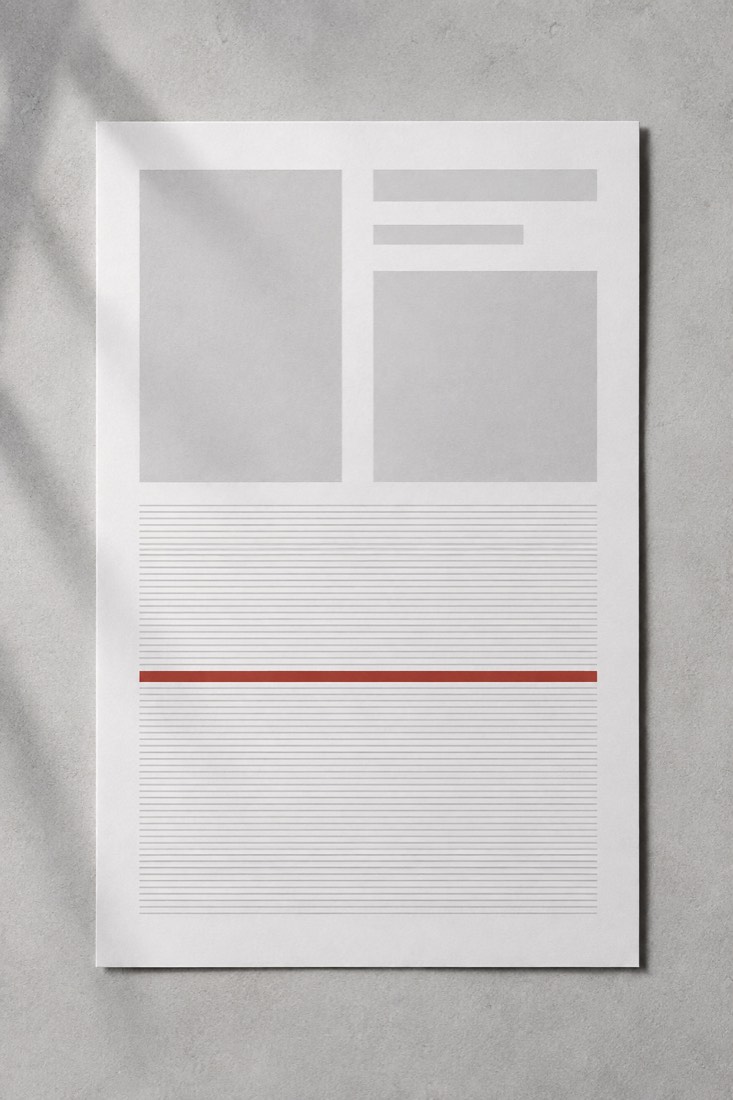
A sheet showing a two column layout skeleton with image placeholders

Balanced

Prose down the left, the figures held to the right where they can be scanned.

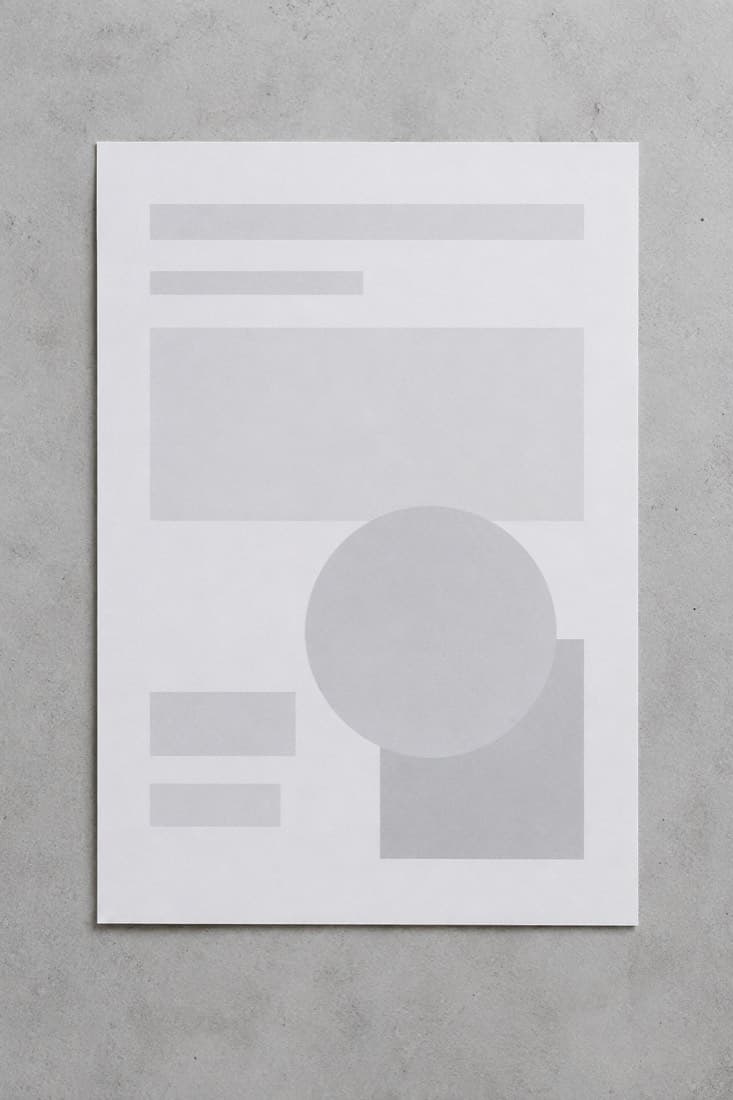
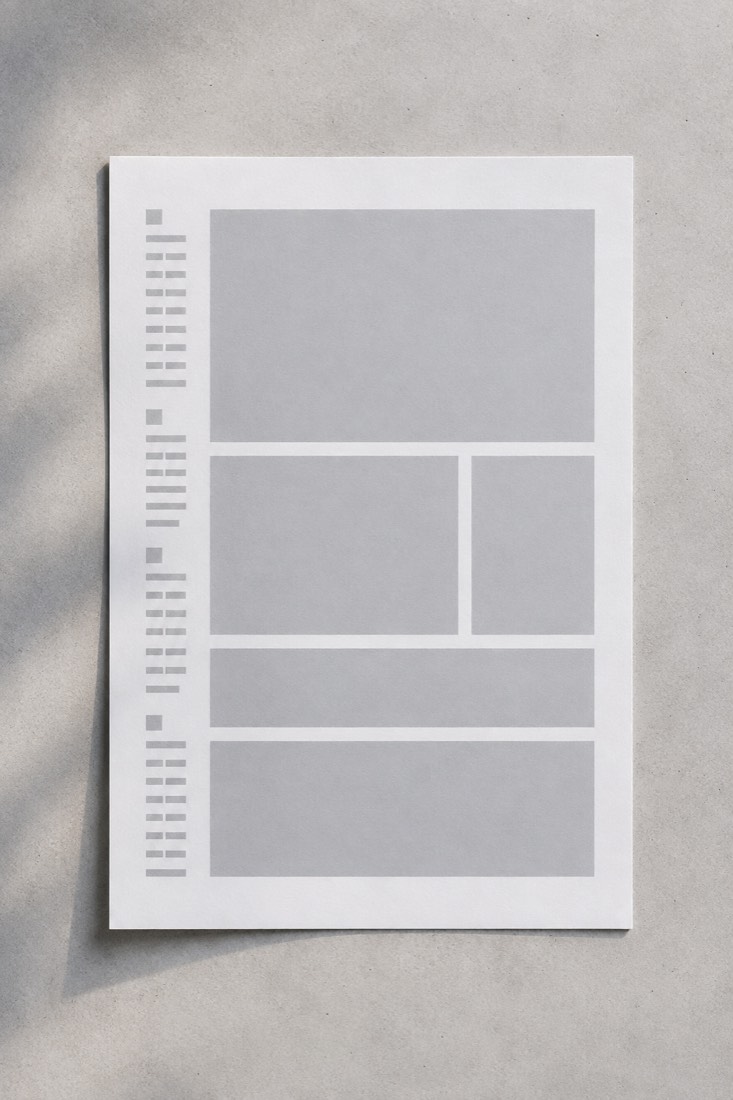
A sheet showing a layout skeleton led by four large panels

Data-led

The numbers first. Use it when the reader already knows what you do.

§04

Pages that came off the press

Layout bases, with nothing written on them yet. This is the whole of what the generator produces.

Hover a sheet to enlarge it, or take the file. Nothing here contains a word, a figure or a date — those arrive when you type them.

§05

What happens when it will not fit

It is refused. That is the product working, not the product failing.

The height of your content is measured against the height of one page as you type. Pass the bottom edge and the blocks responsible are outlined, the export button stops, and the tool offers a block to lose — taken from your own cut list.

It will not make the type smaller to get you out of it. Body copy has a floor of 8.5 pt. Below that the page stops being readable across a table, and a page nobody reads is not a page that fits.

Nothing is deleted for you. The tool tells you the position; the choice is yours.

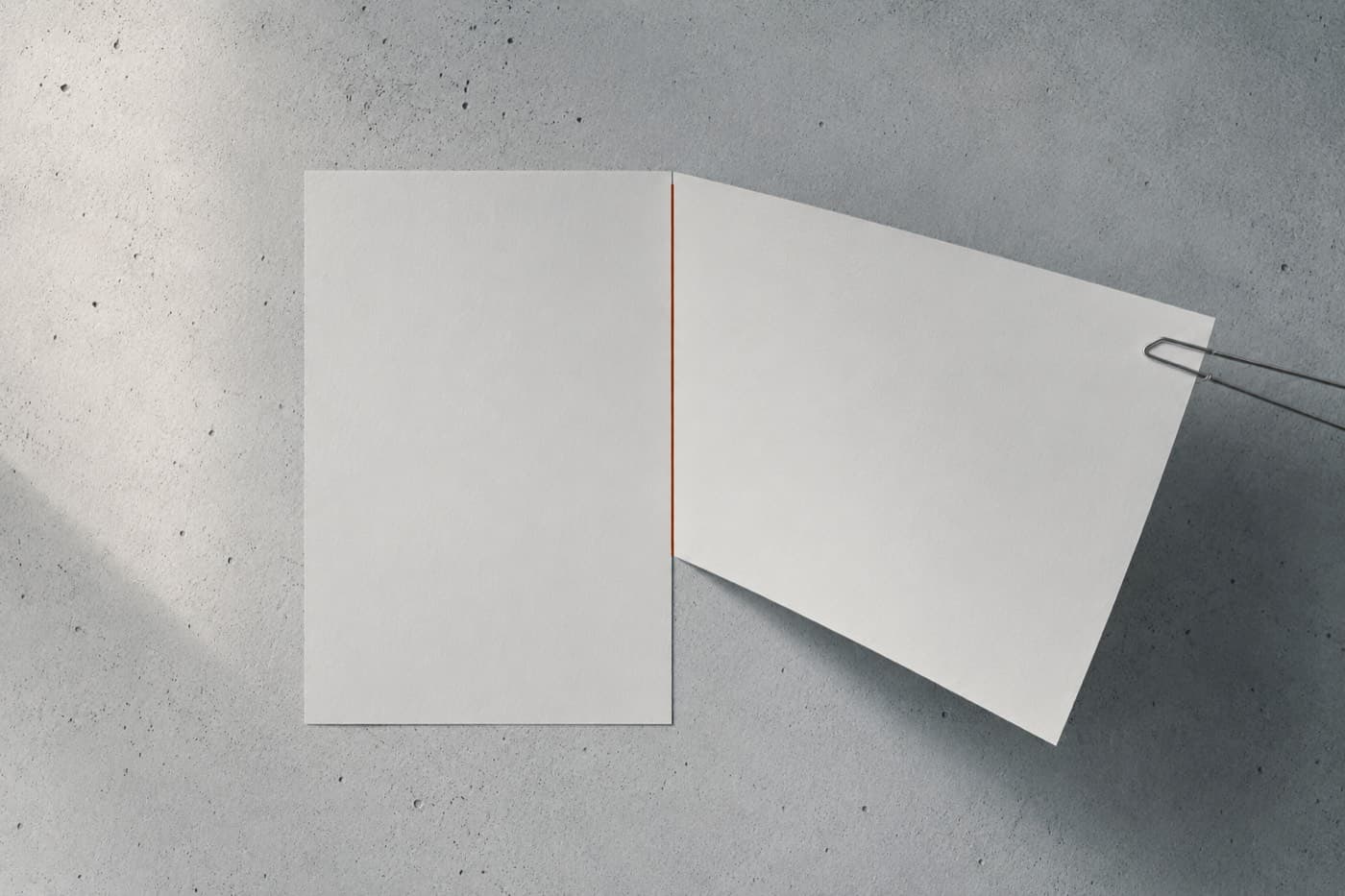
A second sheet being lifted away from the first by a steel clip
The second page is not an option that exists here.

Refusal, verbatim

Over by 6%. Two blocks sit past the bottom edge. Suggested cut: “Detail of the survey method” — belongs in the follow-up, not the page. Export stays closed until it fits.

§06

Three plans, and nothing to buy on the side

Credits arrive with the plan and do not roll over. There are no credit packs and no stored balance.

Free lays out one direction and exports a watermarked screen file. The page you send — unmarked, and printable at 300 dpi — is on the paid plans. Prices in USD.

  • Free

    $0/month, USD

    No card required

    Enough to write the page once and find out what will not fit.

    50 credits a month

    • One layout direction
    • Every text and figure typed and edited by you
    • Overflow guard and the proofreading step
    • Screen PDF export
    Start free
  • Page

    Most pages

    $20/month, USD

    $192 a year, billed once

    For the page you are actually going to send.

    550 credits a month

    • All three layout directions: text-led, balanced, data-led
    • No watermark
    • PDF export, screen and 300 dpi print
    • A4 and Letter page sizes
    • Unlimited edits to every overlaid word and figure
    • Cut list kept with the page
    Choose Page
  • Board

    $58/month, USD

    $557 a year, billed once

    For someone who keeps a page for more than one company.

    2300 credits a month

    • Everything in Page
    • Several company files side by side
    • Version history, so last quarter’s page is still there
    • Batch layout generation
    • Priority generation queue
    Choose Board

What one action costs

Chat request — breaking what you wrote into the six blocks, and the cut list
1
Reading one uploaded photograph
2
Generating or adjusting one layout base
5
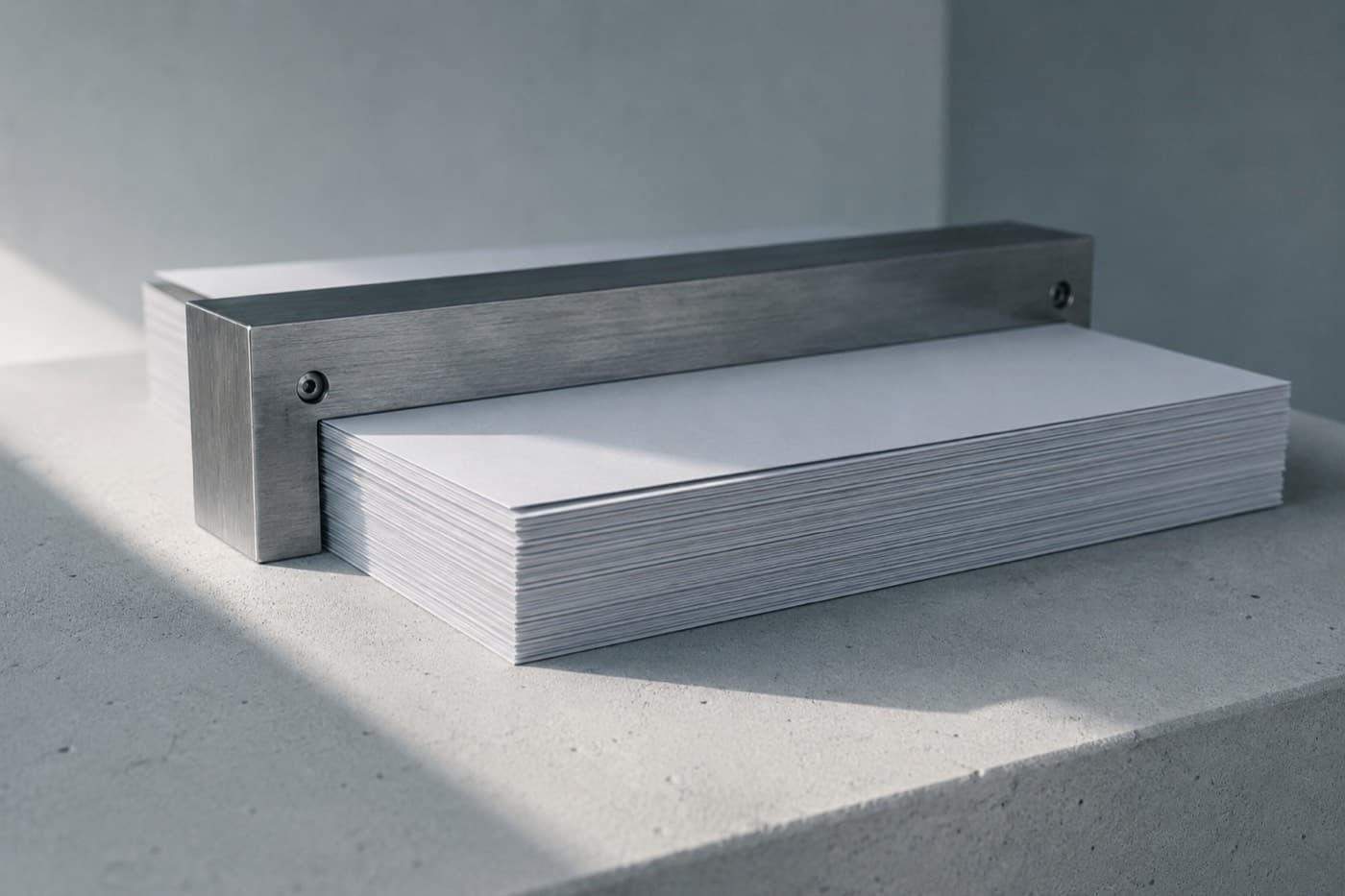
A stack of freshly cut sheets held under a steel bar

There is no video action on this site, and so no credit cost for one.

§07

Questions people ask before they trust it

All answered here, in full, with nothing folded away.

Will you tell me what the company is worth, or how much to raise?
No. Onesheet performs no valuation, no forecast, no market sizing and no comparison against other companies, and it will not suggest a figure to raise. It holds no financial data and inventing any would mislead the people you hand the page to. It is a document tool: you supply every fact and every number, and it decides only what goes where on the paper. Onesheet does not provide investment, financial, legal or tax advice.
What happens when the content will not fit on one page?
You are told, before you can export. The height of the page is measured as you type; the moment the content passes the bottom of the sheet, the blocks that caused it are outlined and export is blocked. You are then shown which block to cut and why, taken from your own cut list. Nothing is deleted for you. And the type is never quietly shrunk to make it fit — body text has a floor of 8.5 pt, and once that floor is reached the page is refused rather than made unreadable. A page nobody can read is not a page that fits.
Is what I type about my company used to train models?
No. What you write here — what the company does, who it sells to, how it makes money, every figure, and everything on the cut list — is not used to train models, ours or anyone else’s. This is unpublished trading information and we treat it that way. It is processed to lay out your page and held only while your file exists. Delete a file and it goes; ask us to erase your account and everything with it goes. The Privacy Policy sets out the retention periods and the deletion route.
Who types the numbers on the page?
You do, every one of them. The generator only produces the visual base of a layout — columns, blocks, rules, margins and white space. Every word, figure, date and label is typed by you and drawn by the browser on top of that base, so it can be corrected character by character. Charts are drawn by the browser from the figures you entered, never generated as a picture. Before any export you pass a proofreading step that puts what you entered next to what the finished page says, line by line, and you tick each one off.
How accurate is the AI, and who is responsible for the result?
The structural breakdown and the cut list are suggestions. They can be wrong, incomplete, or a poor fit for your situation, and you are responsible for checking them. A finished page is not a prospectus, not an invitation to invest and not an offer of any kind; its contents are yours and are not verified by us. Read the AI Disclaimer before you rely on anything the tool produces.
Do unused credits roll over, and can I buy more?
Credits arrive with each billing period and do not roll over. There are no credit packs and no stored balance — if you run out, you move up a plan or wait for the next period. Credits are a service allowance: they are not money, not stored value, not redeemable for cash and not transferable.
How do I cancel, and what happens to the rest of the period?
Cancel from Billing inside your account, in the same number of steps it took to subscribe and through the same channel. Your plan stays live until the end of the period you have already paid for, then stops renewing. We do not pro-rate a refund for time you did not use. If you are a consumer, you may also have a statutory 14-day right to cancel a new subscription — the Refund Policy explains how that works alongside this.
Can I get a refund?
Contact support first; most problems are settled faster than a refund clears. Where an output is defective we would rather restore the credits it consumed than take the page away from you. Approved refunds go back by the same method used to pay. The Refund Policy sets out the whole position, including the statutory cancellation right.
Is there an age limit?
Yes. You must be at least 18 to open an account. Onesheet is made for people running or representing a business, it is not directed at children, and we do not knowingly collect their data.
Why does a tool like this not make video?
Because of how the page is received. It is emailed, printed, put on a table and passed round; someone rings a number on it, writes in the margin, and takes it back to a partner. None of that can be done to a video, and a video cannot be re-scanned in three minutes the way a sheet of paper can. The page has no time dimension and movement is not part of its content, so the product does not generate video at all. That is a decision, not an omission.

Write the page.
We will hold the edge.

Fifty credits to begin with, no card, and the whole of the tool except the unmarked export. If the page is good you will know before you ever pay for it.

You write it. We lay it out.
No valuation. No forecast. No market size.
Every figure on the page is one you typed.